The year in numbers
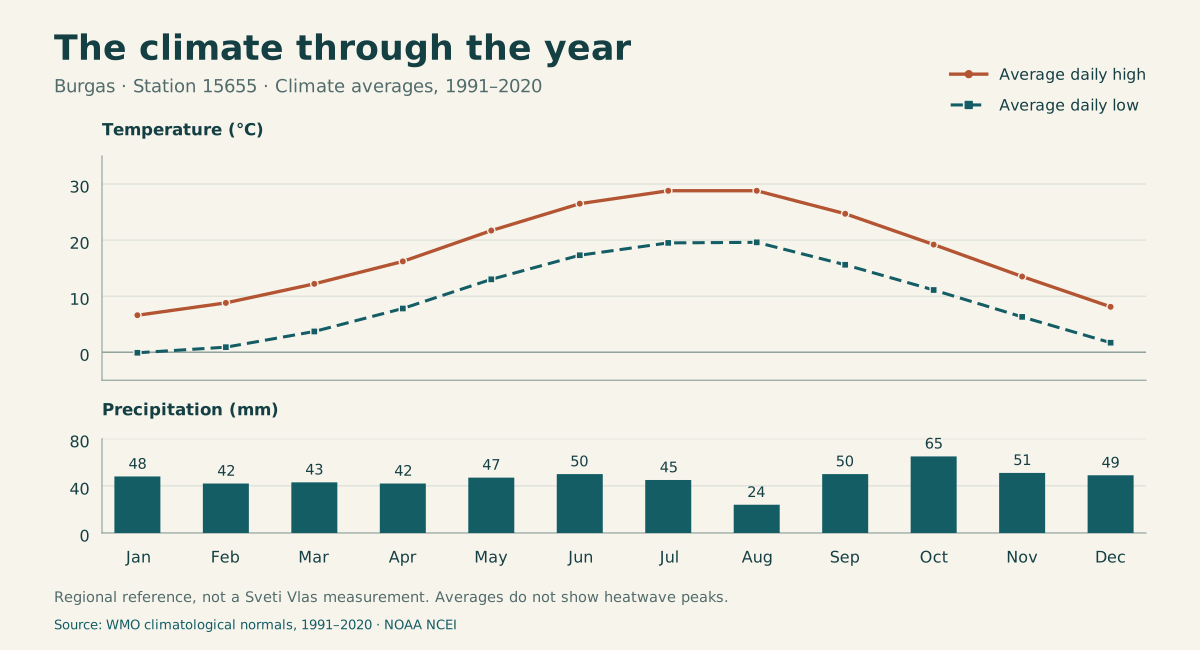
These WMO climate normals, hosted by NOAA, come from Burgas station 15655, at 21 metres above sea level. They describe the region; this dataset has no separate Sveti Vlas series. Elevation, wind exposure and orientation affect conditions at an individual home.
See all twelve months in a table
| Month | Daily high °C | Daily low °C | Rainfall mm |
|---|---|---|---|
| Jan | 6.6 | -0.1 | 48 |
| Feb | 8.8 | 0.9 | 42 |
| Mar | 12.2 | 3.7 | 43 |
| Apr | 16.2 | 7.8 | 42 |
| May | 21.7 | 13 | 47 |
| Jun | 26.5 | 17.3 | 50 |
| Jul | 28.8 | 19.5 | 45 |
| Aug | 28.8 | 19.6 | 24 |
| Sep | 24.7 | 15.6 | 50 |
| Oct | 19.2 | 11.1 | 65 |
| Nov | 13.5 | 6.3 | 51 |
| Dec | 8.1 | 1.7 | 49 |
Daily highs and lows are monthly averages, not extremes. The 1991–2020 period is not a forecast and does not fully reflect more recent changes. Sunshine hours are missing from this station file.
Sources: WMO 1991–2020 climate normals: Burgas station 15655 · NOAA archive · NOAA — World Meteorological Organization climate normals
June to August: make the sea part of your day
Average daily highs rise from 26.5°C in June to 28.8°C in July and August. August averages 24 mm of rain, the lowest monthly total in this series. This is the season for beach days, swimming and evenings by the water.
For a longer summer rental, a shaded terrace and bedroom cooling are useful comforts. Average lows are around 20°C in July and August; individual hot spells can be considerably warmer. Choose the timing of longer walks around the actual forecast.
Sources: WMO 1991–2020 climate normals: Burgas station 15655 · NOAA archive
May and September: explore beyond the beach
May averages 21.7°C by day and September 24.7°C. If you enjoy walking and would like to see the town outside its summer peak, these are useful months to start with. October still averages a daily high of 19.2°C and a low of 11.1°C.
Build a week around coastal walks, an afternoon in Nessebar and a visit to Pomorie’s salt lake. The regional guide gives specific places and opening-time sources. October is also the wettest month in this series at 65 mm, so a gallery or performance makes a useful companion to time outdoors.
Sources: WMO 1991–2020 climate normals: Burgas station 15655 · NOAA archive
A week that still has things to look forward to
January averages 6.6°C by day and a low just below zero. A year-round home needs dependable heating, good windows and a dry building. Ask for winter bills from the actual apartment; a sea view tells you little about its indoor comfort.
There are places to build a regular week around: CoolFit lists Pulse Sveti Vlas as open year-round, while SoulZen describes year-round locations and an indoor studio at Etara 1. The activity guide gives contacts and explains the offers. Arrange session times, language and access directly.
Sources: WMO 1991–2020 climate normals: Burgas station 15655 · NOAA archive · Pulse Sveti Vlas — CoolFit participating venue · SoulZen — year-round studios and activities
Choose the months you want to live here
For a life split between two countries, May or September can be a useful first stay. For a permanent move, add a week in January or February: you will experience the home and town in the season least like a summer holiday.
Use the same accommodation or neighbourhood on both visits. You can then compare whether you enjoy the routes, time at home and free days in both seasons. The visit plan gives you a concrete first week to work with.
Sources: WMO 1991–2020 climate normals: Burgas station 15655 · NOAA archive
Your next steps
- Visit in a less familiar season before a permanent decision.
- Test bedroom heating and cooling.
- Request actual utility bills for relevant months.
- Check ventilation and investigate damp indicators.
- Confirm date-specific facilities with the accommodation.
Sources & useful links (9)
- Bulgaria climate and climate change — NIMH 2024 (checked 2026-10-15)
- Burgas regional coastal conditions — Bulgarian Academy of Sciences (checked 2026-10-15)
- EVN — customer service and electricity outages (checked 2026-10-15)
- May season opening — municipal tourism (checked 2026-10-15)
- Banana Tree Apartment — owner rental offer (checked 2026-10-15)
- WMO 1991–2020 climate normals: Burgas station 15655 · NOAA archive (checked 2026-10-16)
- NOAA — World Meteorological Organization climate normals (checked 2026-10-16)
- Pulse Sveti Vlas — CoolFit participating venue (checked 2026-10-16)
- SoulZen — year-round studios and activities (checked 2026-10-16)
General information, not personal legal, tax, financial or medical advice. Check arrangements with the relevant provider and a qualified adviser.